
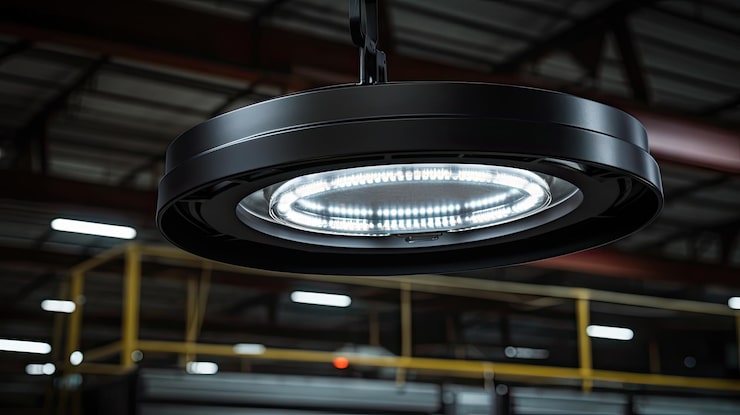
Walk into any warehouse distribution center or manufacturing plant and look up. Chances are you'll spot rows of large fixtures hanging far above the floor casting bright even light across the entire space. That's a high bay light at work and choosing the wrong one can cost a facility more than just money on its electricity bill.
Getting this decision right matters more than most facility managers realize. Poor lighting choices lead to dim work areas safety hazards and unnecessarily high energy costs that pile up month after month. So how does someone actually pick the right one?
A high bay light is specifically designed for spaces with ceilings typically above 20 feet. Unlike standard office lighting these fixtures need to project light downward over long distances without losing brightness or creating harsh shadows across the working area.
Warehouses, gymnasiums, factories and large retail spaces all rely on this category of industrial lighting because standard fixtures simply can't deliver the coverage and intensity needed at that height. Ever noticed how a poorly lit warehouse aisle feels almost unsafe to walk through? That's usually a sign the facility is using the wrong type of fixture for its ceiling height.
Older facilities often still run on metal halide or fluorescent high bay fixtures. These older technologies work but they come with real downsides worth considering. Metal halide bulbs take several minutes to reach full brightness after being switched on which is a genuine problem in facilities needing instant illumination during shift changes or emergencies.
LED high bay lights on the other hand reach full brightness instantly and consume significantly less power for the same or better light output. Some facility upgrades report energy savings between 40 and 60 percent simply from switching to LED based industrial high bay lighting. That's not a small number when multiplied across dozens or hundreds of fixtures running many hours a day.
Choosing a high bay light isn't just about picking whatever looks brightest on a spec sheet. Lumens matter far more than wattage alone. Two fixtures with identical wattage can produce vastly different amounts of usable light depending on their design and efficiency.
A general rule many lighting engineers follow is calculating lumens per square foot based on the specific task performed in that zone. A packing area might need different warehouse lighting intensity than a storage aisle where forklifts simply pass through without detailed tasks being performed.
Here's something many facility managers don't consider until later. High bay lights come in different shapes and each shape suits different applications. UFO style fixtures work well in open areas needing wide even coverage like gymnasiums or general warehouse floors.
Linear high bay fixtures however work better in aisle spaces or areas needing directional lighting along a specific path. Choosing between these isn't just an aesthetic decision. It genuinely affects how evenly light spreads across a working area and how many shadows or dark spots remain uncovered.
Facilities with high ceilings face a unique challenge. Replacing a bulb 30 feet in the air isn't as simple as swapping one in a standard office ceiling. This is exactly why longevity matters so much when selecting a high bay light for industrial use.
Quality LED fixtures often last 50000 hours or more which drastically reduces how often maintenance crews need lifts or scaffolding just to change a bulb. Facilities operating around the clock especially benefit from this reduced maintenance burden since even a short shutdown for bulb replacement can disrupt operations.
Selecting proper high bay lighting requires balancing ceiling height, required brightness, energy efficiency and budget all at once. Getting expert guidance before a bulk purchase often saves facilities from costly mistakes down the line especially when dealing with large scale commercial high bay lighting projects across multiple buildings.
For facility managers genuinely researching high bay light options that balance durability efficiency and proper coverage for their specific space, exploring a specialized supplier makes the process considerably easier. That's where a provider like Penta Lighting becomes a smart place to start especially for those wanting reliable LED high bay fixtures built for demanding industrial environments rather than generic one size fits all options.
Q: What ceiling height requires high bay lighting?
A: Spaces with ceilings around 20 feet or higher typically need high bay fixtures for proper coverage and brightness.
Q: Are LED high bay lights worth the upgrade cost?
A: Yes most facilities recover the upgrade cost within a couple of years through reduced energy bills and lower maintenance needs.
Q: What's the difference between UFO and linear high bay lights?
A: UFO style fixtures suit open wide spaces while linear fixtures work better for aisles or directional lighting needs.
Q: How long do quality high bay LED fixtures last?
A: Most quality fixtures last around 50000 hours or more depending on usage and build quality.
Q: Can high bay lights be dimmed for energy savings?
A: Many modern LED models support dimming which helps facilities save additional energy during low activity periods.