
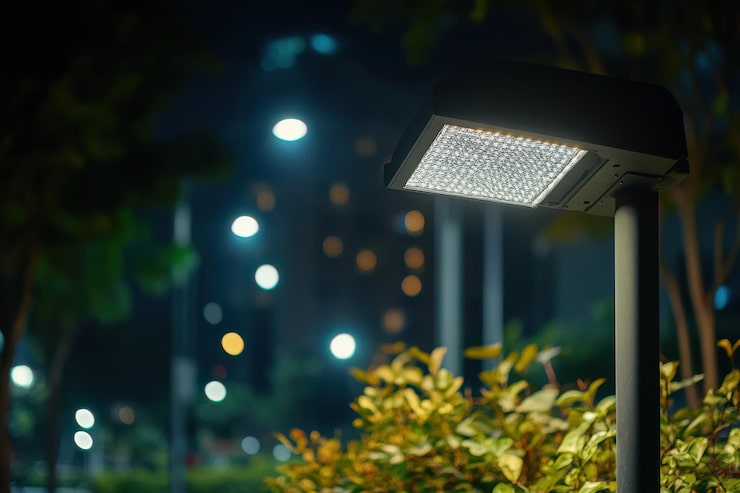
Ever walked through a dim car park and felt your senses jump to high alert? Poor lighting does that to people. A well-planned LED floodlight setup changes the mood of an outdoor space in seconds. Murky corners turn into clear and welcoming zones. So how does this technology pull it off?
Old halogen lamps waste most of their energy as heat. An LED floodlight works differently. Tiny semiconductor chips turn electricity straight into light so more power becomes usable brightness. Here is a fun fact. A quality LED lamp can run for over 50000 hours. That equals roughly eleven years of nightly use. Few traditional bulbs come anywhere close. It is a bit like trading a candle for a sunrise.
Floodlights are designed to spread light across big areas. Beam angles range from tight 30-degree throws to broad 120-degree washes. A sports field needs a powerful and focused reach. A courtyard prefers a soft and even glow. Picking the right beam angle matters as much as picking the right brightness. Ever noticed harsh glare sitting beside deep shadows? Poor optics cause that. Good outdoor lighting keeps illumination balanced from edge to edge.
Brightness alone does not guarantee good sight. Colour quality plays a huge role. The Colour Rendering Index (CRI) measures how faithfully a light shows real colours. Old sodium lamps wash everything in orange. A modern LED floodlight with a CRI above 80 reveals true tones. Security cameras love it too. Footage turns crisp so a guard can tell a red car from a brown one instantly. Cool white around 5000K feels alert and sharp. Warm white around 3000K feels cosy for gardens and patios.
Shadows are a trespasser's best friend. Well-lit premises discourage trouble before it starts. Warehouses and loading docks and school grounds all benefit. Pair a fixture with motion sensor lighting and the effect grows. A sudden flash of light startles intruders and alerts nearby residents. Workers also trip less often when walkways stay fully visible. Good visibility is not a luxury. It is essential for safety lighting.
Here is the exciting bit. LEDs can cut electricity use by up to 80 percent compared with older lamps. Think of it as swapping a leaky bucket for a sturdy pipe. Lower heat also means less strain on wiring. Maintenance crews climb ladders far less often. Picture a large car park with dozens of poles. The savings pile up fast. Many owners recover their energy efficient lighting investment within a couple of years. Not bad for a lamp that also shines better!
Outdoor fixtures battle dust and downpours and scorching sun. Smart buyers look for an IP65 rating or higher. That code means the unit shrugs off dust and water jets. Die-cast aluminium bodies pull heat away from the chips and extend lifespan. A reliable waterproof floodlight keeps performing through the monsoon season and beyond.
Almost everywhere! Stadiums and construction sites and farms and building facades all gain from a strong beam. Retail forecourts use them to pull in evening customers. Even a humble backyard feels bigger once an LED floodlight washes the lawn. Which corner of your property sits in the dark right now?
Great lighting quietly changes how people feel and move and work after sunset. It builds confidence and trust and a sense of calm. So the next time a dark pathway makes you hesitate, remember that a smart upgrade is closer than you think. Brighter nights are waiting!
Anyone hunting for dependable LED floodlight solutions that lift outdoor visibility can explore Penta Lighting for a wide range of commercial lighting options.
Q: How long does an LED floodlight last?
Most quality units run 50000 hours or more.
Q: Is an LED floodlight good for home use?
Yes. Lower wattage models suit gardens and driveways nicely.
Q: What IP rating should I choose?
IP65 or higher handles rain and dust well.
Q: Which colour temperature works best outdoors?
Cool white suits security and work areas while warm white suits relaxed spaces like patios.
Q: Do LEDs really save money?
Absolutely. It uses far less power and needs little maintenance.