
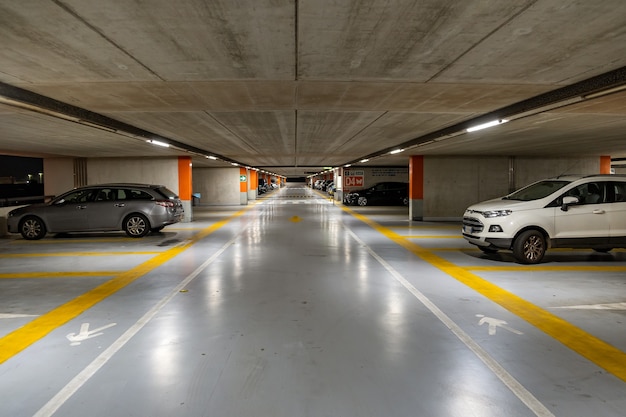
Ever walked through a poorly lit parking structure late at night and felt that instinctive unease? That flickering half working bulb in the corner isn't just annoying. It's a genuine safety concern and honestly a sign that the property owner might be overdue for an upgrade. A proper carpark light does more than illuminate parked cars. It shapes how safe and welcoming an entire space feels.
Parking facilities are often the most overlooked part of building infrastructure. Yet they're usually the first and last space visitors experience during a visit. So why do so many properties still run on outdated inefficient lighting systems?
Older carpark facilities frequently still rely on high pressure sodium or fluorescent fixtures. These technologies work but they guzzle far more electricity than necessary for the amount of light they actually produce. Sodium lights in particular cast that dull orange tint many people associate with older parking structures and highways.
A modern carpark light built on LED technology uses significantly less power while producing brighter more natural light. Some facility upgrades report energy reductions between 50 and 70 percent after switching from sodium or fluorescent to efficient LED carpark lighting. For large multi level structures running lights nearly 24 hours a day that difference adds up fast on the utility bill.
Here's something worth thinking about. Is a parking area actually safer just because it's bright? Not necessarily. Harsh glare or uneven lighting with dark pockets between fixtures can be just as problematic as dim lighting overall.
A well designed carpark light setup focuses on even distribution rather than simply cranking up brightness in a few spots. Shadowy corners near stairwells or vehicle entry points are often where safety incidents occur precisely because visibility drops suddenly in those transition zones. Good parking lot lighting design accounts for this by spacing fixtures properly rather than relying on a handful of overly bright points.
Does a parking garage really need full brightness at 3am when barely anyone is around? Increasingly facility managers are saying no. Smart carpark light systems now commonly use motion sensors and daylight harvesting technology to adjust brightness based on actual occupancy and ambient light levels.
This isn't just a nice bonus feature either. Motion sensor integration can reduce energy consumption further beyond what LED technology alone achieves since fixtures dim automatically during low traffic hours and brighten instantly when someone enters the area. Facilities using this kind of smart carpark lighting often see additional savings layered on top of their base LED efficiency gains.
Parking structures aren't exactly gentle environments for lighting fixtures. Exhaust fumes temperature swings, moisture and constant vibration from vehicles all take a toll over time. This is precisely why choosing a durable carpark light matters just as much as choosing an efficient one.
Quality LED fixtures designed specifically for parking environments typically carry weatherproof and dustproof ratings that standard indoor lighting simply doesn't offer. Facilities that cut corners on fixture quality often end up replacing bulbs far more frequently which quietly erodes any savings gained from switching to LED in the first place.
Would a tenant feel comfortable walking to their car alone at night in a dimly lit garage? Probably not. Proper carpark lighting directly influences how safe a property feels which in turn affects tenant satisfaction and even property value over time.
Commercial properties particularly retail centers and office buildings increasingly treat quality parking lighting as a competitive advantage rather than a basic utility expense. A well lit parking area signals that a property is well managed and genuinely cares about visitor experience.
Selecting the right carpark light setup depends on ceiling height structure layout traffic patterns and budget all working together. Getting this balance wrong either wastes money on excessive brightness or creates genuine safety gaps in coverage.
For property managers and engineers researching carpark light solutions that combine efficiency, durability and smart control features exploring a specialized supplier makes the decision considerably easier. That's where a provider like Penta Lighting becomes a smart place to start, especially for those wanting reliable LED carpark lighting built specifically for demanding parking environments rather than generic fixtures repurposed from other applications.
Q: How much energy can LED carpark lights actually save?
A: Most facilities report energy reductions between 50 and 70 percent compared to older sodium or fluorescent systems.
Q: Do motion sensor carpark lights actually work well in busy garages?
A: Yes modern sensors respond quickly enough to maintain safety while still saving energy during low traffic periods.
Q: What makes a carpark light different from standard outdoor lighting?
A: Carpark fixtures typically need higher weatherproof and dustproof ratings to handle exhaust fumes vibration and temperature swings.
Q: How often do LED carpark lights need replacement?
A: Quality fixtures often last 50000 hours or more significantly reducing maintenance frequency compared to older technologies.
Q: Does better carpark lighting really affect property value?
A: Yes, well lit parking areas improve safety perception which directly influences tenant satisfaction and overall property appeal.