
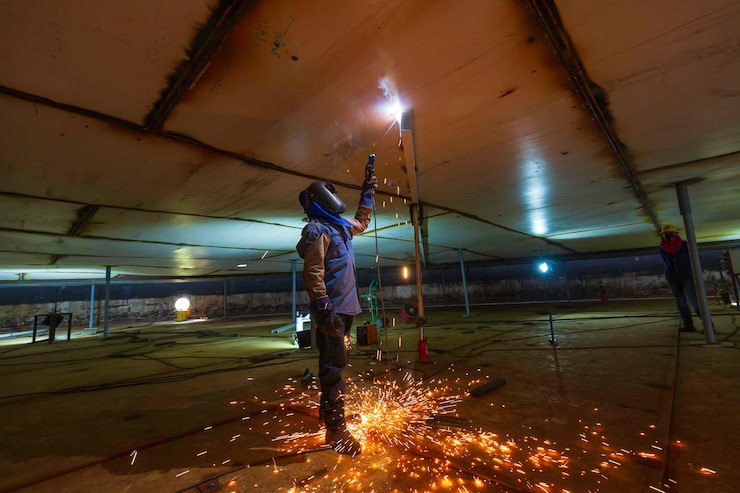
Ever walked through a refinery at night and wondered what keeps the lights on without sparking a disaster? Or maybe you manage a chemical plant where one stray spark could change everything. Lighting rarely gets the spotlight in safety talks. Yet it sits at the core of every hazardous site. Facility managers who invest in Explosion proof lighting Singapore often discover that the right fixtures protect people and equipment and productivity all at once.
An ordinary light fitting can run hot and throw tiny sparks when a switch flips or a filament fails. That is harmless in an office. It is dangerous around flammable gas or vapour or dust. Here is a fact worth remembering. An explosion needs just three things to occur: fuel and oxygen and an ignition source. Remove the ignition source and the whole chain breaks. So why leave it to chance? Purpose-built hazardous area lighting seals the electrical parts inside a tough housing that stops them from igniting the atmosphere outside.
Many people assume the fixture simply prevents any explosion from happening inside. The truth is more clever. A flameproof enclosure is designed to contain an internal blast and cool the escaping gases before they touch the outside air. Thick castings and precision-machined joints do the heavy lifting. Other designs rely on intrinsically safe circuits that limit energy so low that a spark cannot form. It is part engineering and part physics. Honestly it feels like putting a lid on a pressure cooker that never boils over.
Older sodium and fluorescent units gobble power and need frequent bulb swaps. Every swap inside a hazardous zone means shutdowns and permits and risk. LED technology flips that story. Explosion proof LED lighting runs cooler and lasts for tens of thousands of hours and sips far less electricity. Cooler operation matters a great deal because surface temperature is a key safety rating in volatile areas. Fewer replacements also mean fewer workers climbing ladders near dangerous spots. Savings follow naturally.
Hazardous areas are not all equal. Zone 1 might involve gas present during normal operation while Zone 2 covers occasional presence. Dust areas carry their own classifications. Choosing the wrong fixture for a zone is a classic mistake. Look for ATEX certified lighting or IECEx certified fixtures that match your site rating. Check the temperature class and the ingress protection rating as well. A strong IP66 rated luminaire shrugs off dust and heavy water jets. Singapore’s humid climate and frequent downpours make that last point especially practical.
Picture a petrochemical facility on Jurong Island where storage tanks and pipelines stretch in every direction. Dependable industrial LED lighting keeps operators safe during night shifts. Now think about a paint spray booth in a shipyard. Solvent vapour hangs in the air and a standard fitting would be a gamble. Other common homes include fuel depots and offshore support yards and pharmaceutical plants and grain handling facilities. Even marine and offshore lighting needs special care because salt air corrodes weaker materials fast. Each setting asks for a slightly different design.
Start with the hazard classification of your site. Match the certification and the temperature rating to the substances present. Compare lumen output and beam angle so workers can see clearly without glare. Ask about corrosion-resistant materials like marine-grade aluminium or stainless steel. Request documentation too because inspectors will want to see it. Does the supplier offer installation support and after-sales service? That question separates a seller from a true partner.
Good lighting does more than satisfy compliance. Clear visibility cuts errors and speeds up inspections and lifts morale on long shifts. Some plants even report fewer minor incidents after switching to brighter and more uniform fixtures. Add energy efficient lighting solutions into the mix and the power bill drops as well. It is rare to find a safety upgrade that pays you back this directly.
Think about the people who walk those catwalks and tank farms every night. They trust the equipment above their heads without a second thought. That trust deserves to be earned. Choosing the right fixture is a quiet promise that everyone goes home safe. So take a fresh look at your site and ask one honest question. Is every light doing its job without adding risk?
Looking for a dependable partner in Explosion proof lighting Singapore? Readers searching online for safe and efficient solutions for hazardous industrial environments can visit Penta Lighting to explore lighting options built around safety and performance.
What does explosion proof lighting mean?
It describes fixtures built to contain internal sparks or limit energy so they cannot ignite flammable gas or dust nearby.
Is LED better than traditional lamps in hazardous areas?
Yes. LEDs run cooler and last longer and use less power. That reduces both risk and maintenance visits.
How do I know which certification I need?
Check your site’s zone classification and the gases or dust present. ATEX and IECEx are widely recognised standards.
Can these fixtures handle outdoor weather?
Many models carry high IP ratings that protect against heavy rain and dust. Always confirm the rating before installation.